2003-September
See also: || 2003 || view slideshow
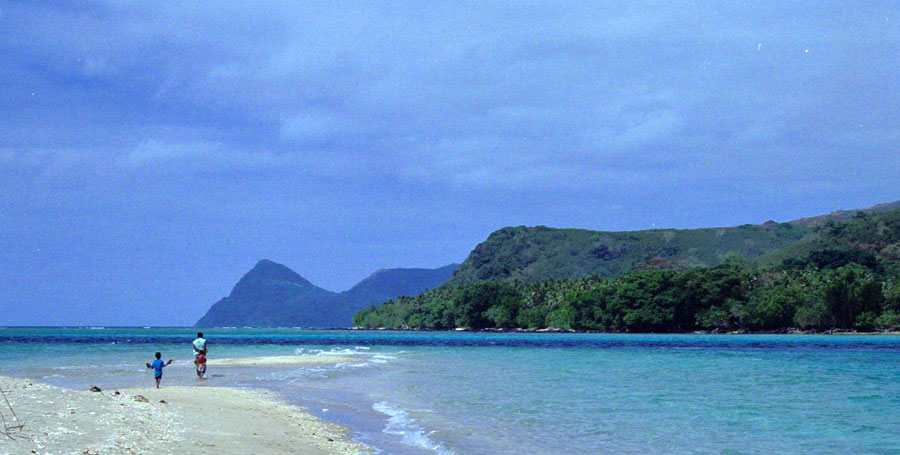
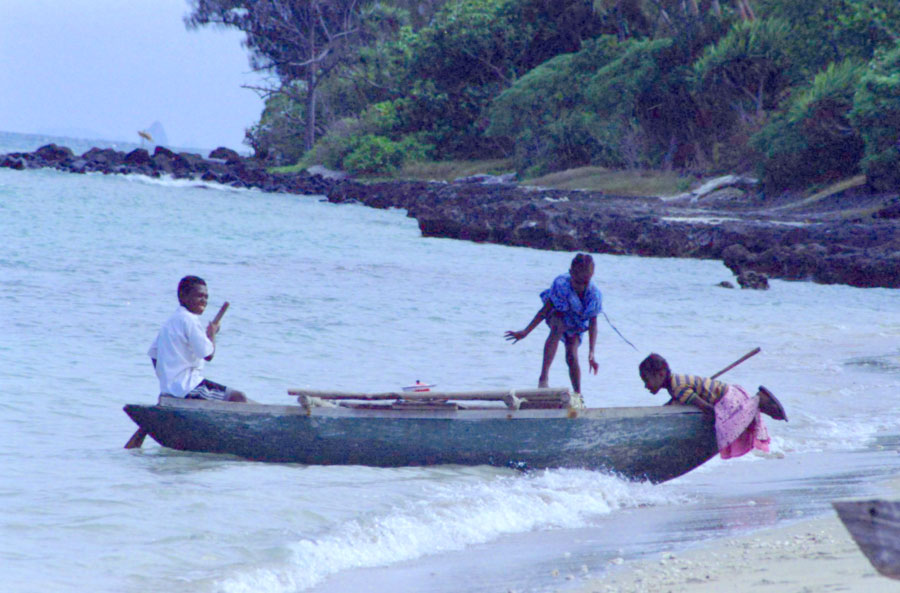 The young boy at the stern of this canoe had just paddled
across the deep but narrow channel between Nguna and nearby
Pele island. The currents in this channel are swift and constantly
shifting, but he managed the trip without apparent difficulty.
He had no sooner arrived when two young girls came running up
to play on his canoe.
The young boy at the stern of this canoe had just paddled
across the deep but narrow channel between Nguna and nearby
Pele island. The currents in this channel are swift and constantly
shifting, but he managed the trip without apparent difficulty.
He had no sooner arrived when two young girls came running up
to play on his canoe.
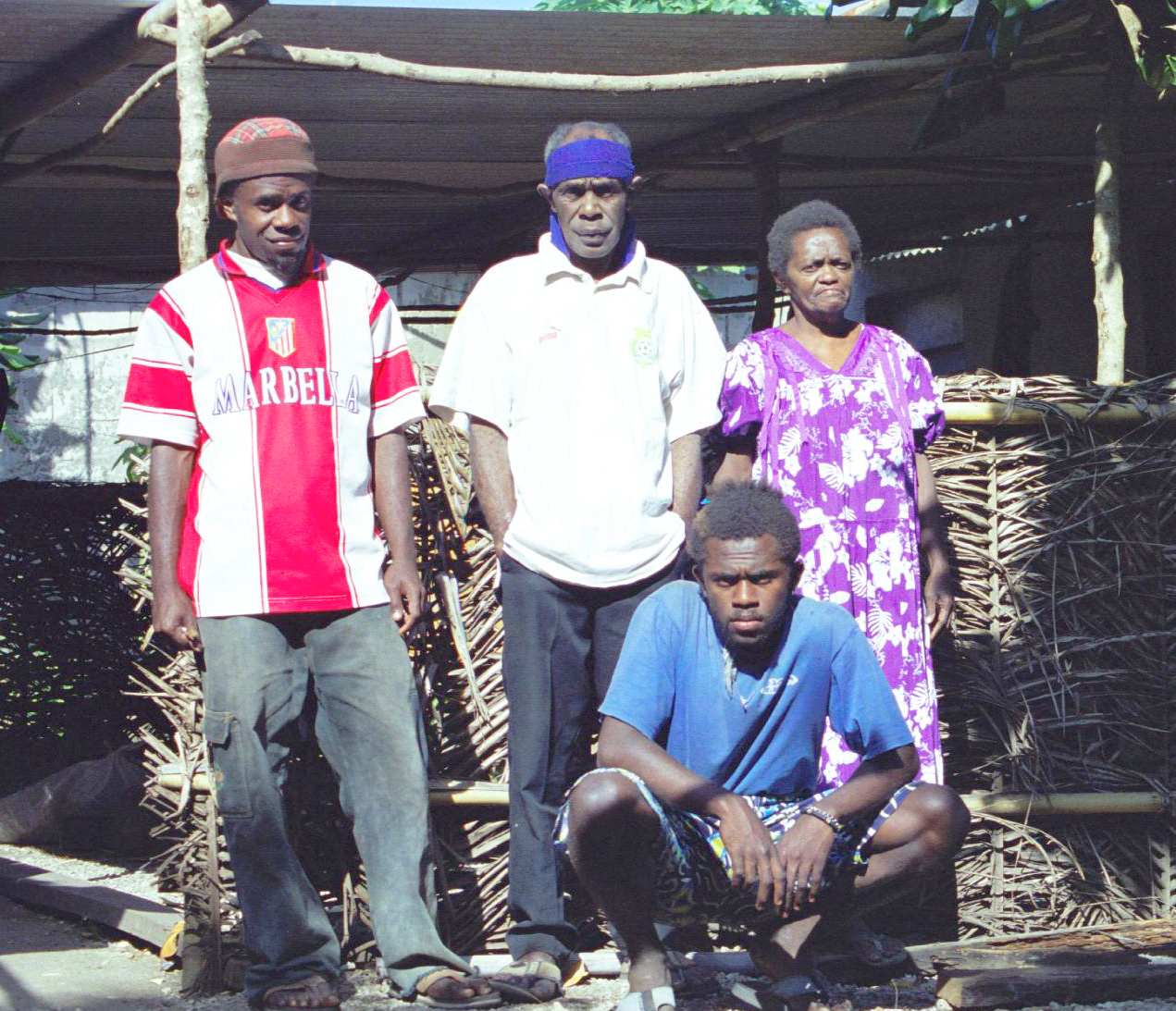 On my last afternoon on Nguna Island, I took this photo
of my adoptive family. I had thought that the terms 'papa',
'mama' and 'brada' were only a formality - until my mama
looked at me with tears in her eyes as I prepared to leave.
My papa's head is bound in a strip of terry cloth. He'd been
suffering from a headache brought on by a recurrence of malaria.
The local nurse gave him aspirin for the pain.
On my last afternoon on Nguna Island, I took this photo
of my adoptive family. I had thought that the terms 'papa',
'mama' and 'brada' were only a formality - until my mama
looked at me with tears in her eyes as I prepared to leave.
My papa's head is bound in a strip of terry cloth. He'd been
suffering from a headache brought on by a recurrence of malaria.
The local nurse gave him aspirin for the pain.
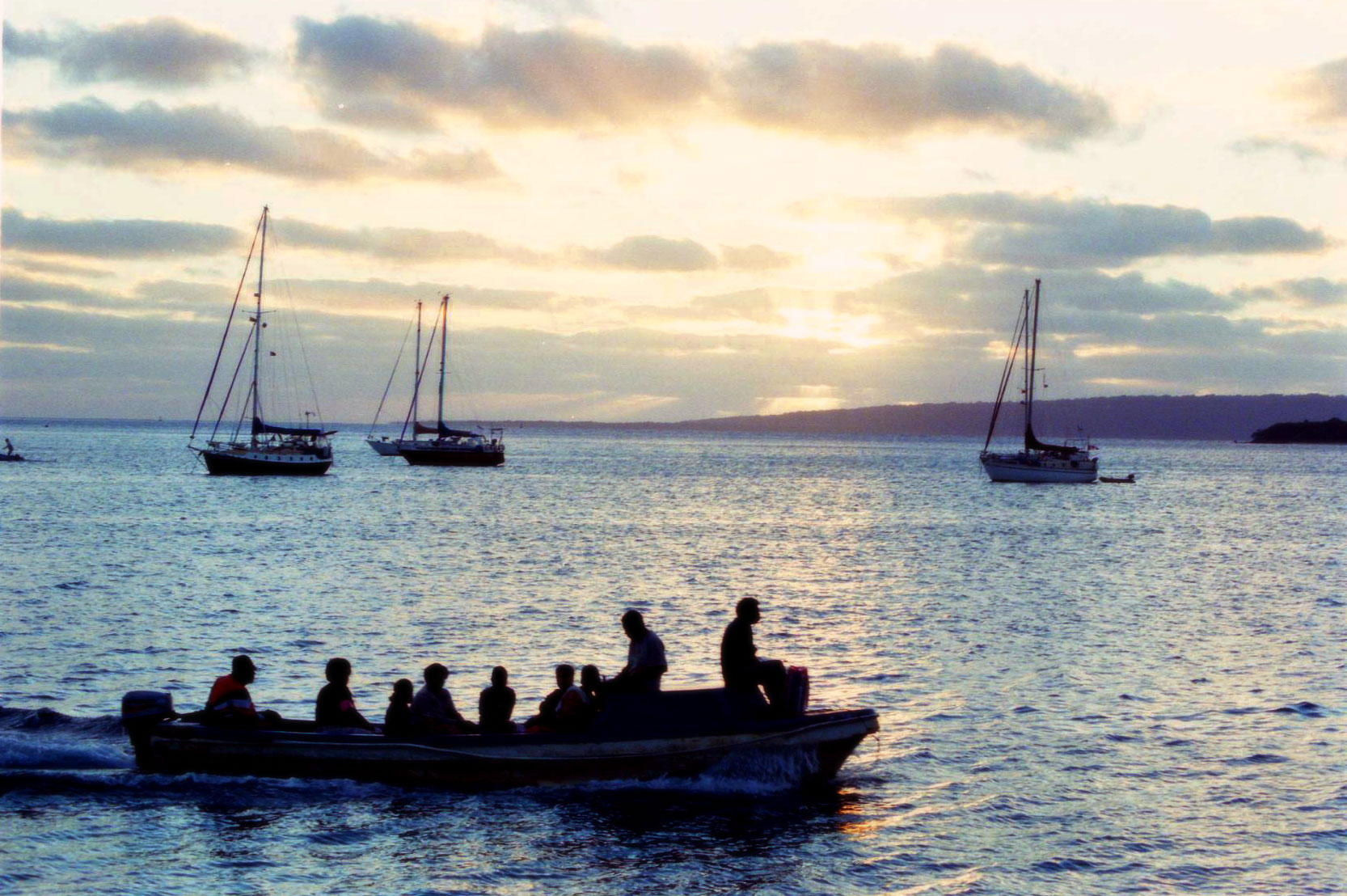
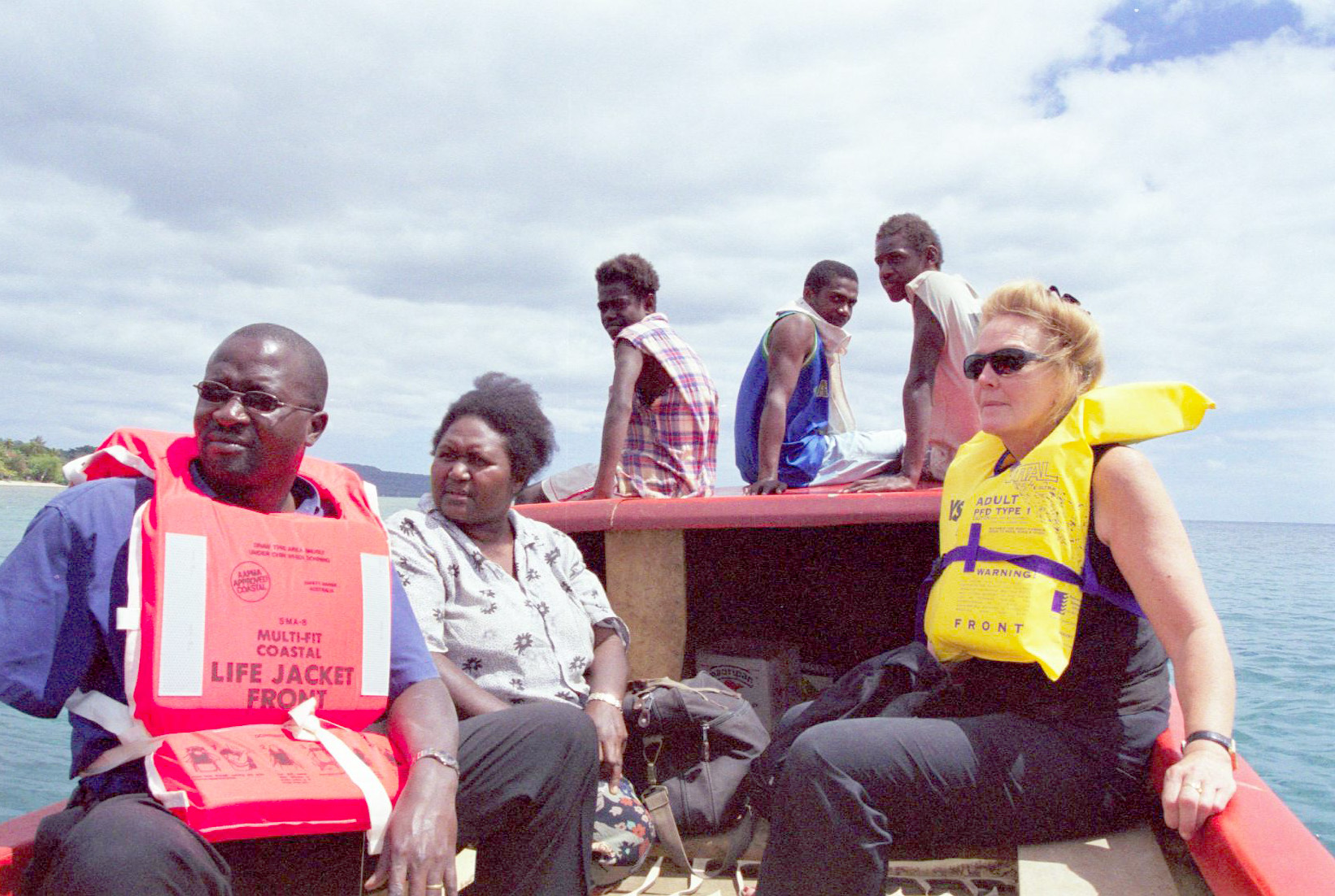 As with all of the small islands that surround Efate, the only means of
access is by small boat. Having gained the permission of the young boys
perched on the bows, I took this photo of our small contingent during the
crossing. Wearing life jackets are Lyn and Hezbourne, fellow volunteers.
Not wearing a lifejacket is our Bislama teacher and interpreter, Joy.
The boys did their best not to giggle at the nervousness expressed by
the newcomers when the wind picked up and we felt the first small ocean
swell.
As with all of the small islands that surround Efate, the only means of
access is by small boat. Having gained the permission of the young boys
perched on the bows, I took this photo of our small contingent during the
crossing. Wearing life jackets are Lyn and Hezbourne, fellow volunteers.
Not wearing a lifejacket is our Bislama teacher and interpreter, Joy.
The boys did their best not to giggle at the nervousness expressed by
the newcomers when the wind picked up and we felt the first small ocean
swell.
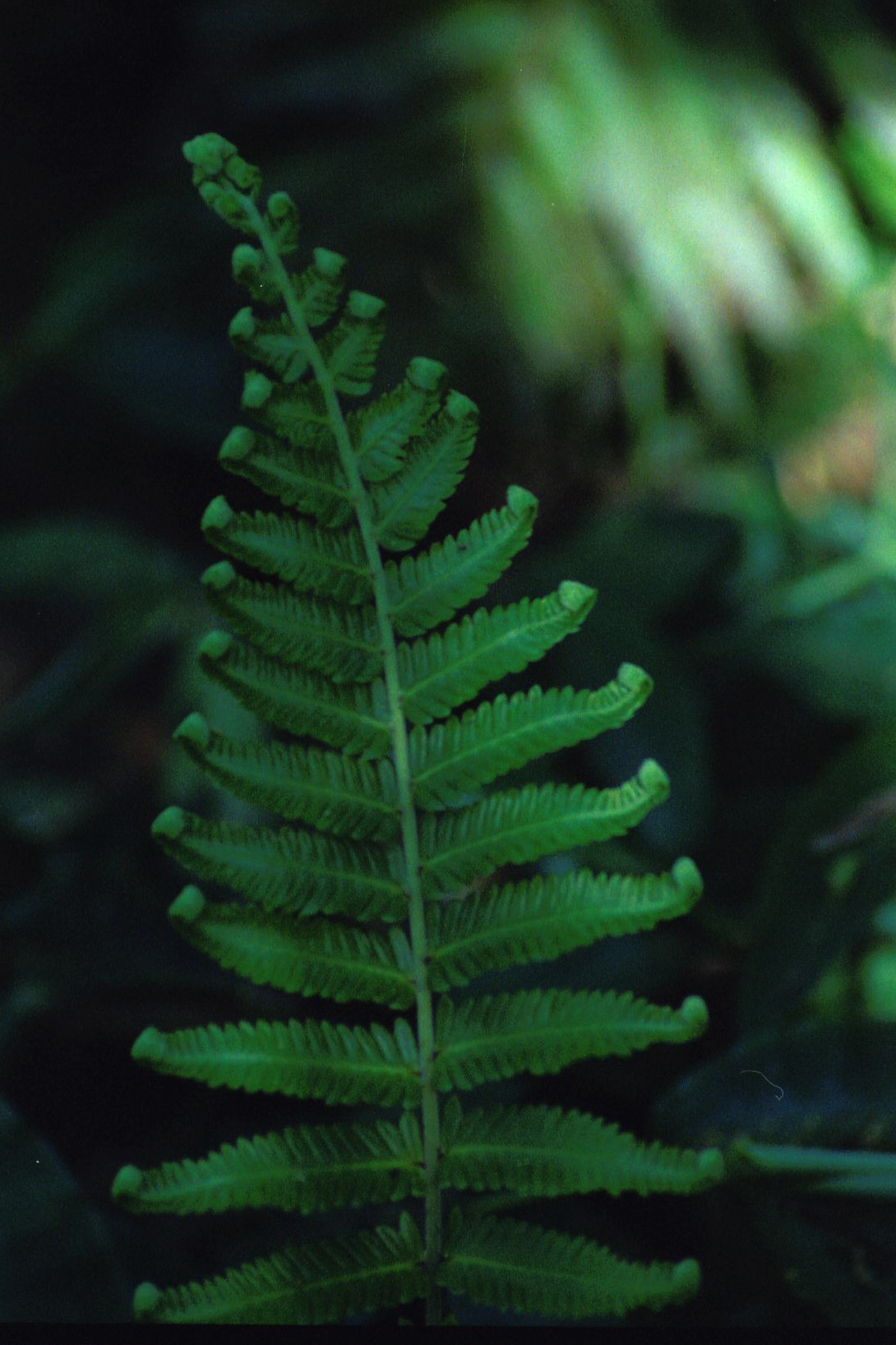
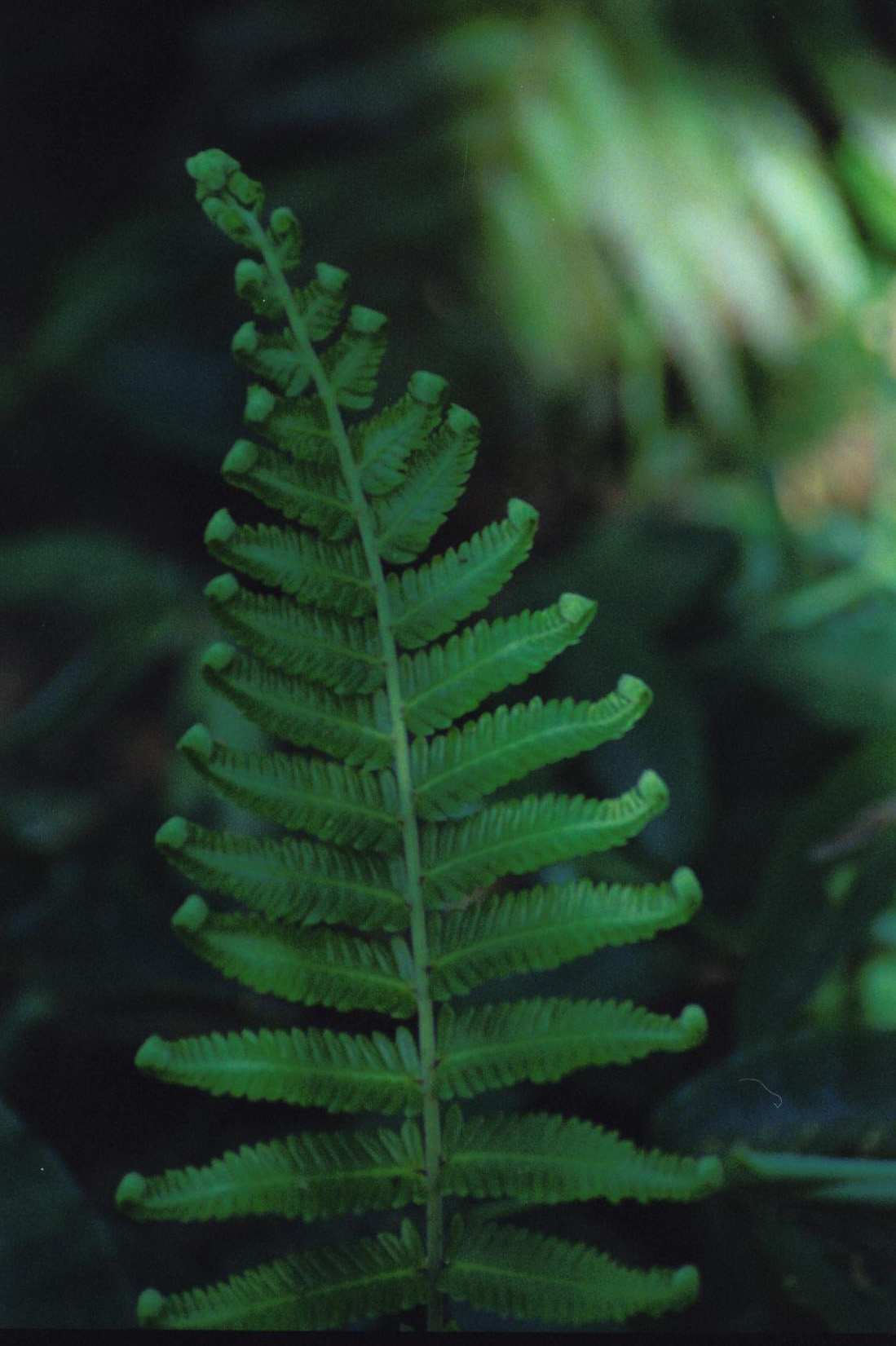 On our last full day in Nguna, the men insisted that we should walk to the top
of the hill at whose base the village sits. The walk took us through a heavily
forested area interspersed with small plots on which taro, yam, popo
(papaya) and a wide variety of other 'island food' were grown. This fern is
gathered and used as food, much as fiddleheads are in Canada.
On our last full day in Nguna, the men insisted that we should walk to the top
of the hill at whose base the village sits. The walk took us through a heavily
forested area interspersed with small plots on which taro, yam, popo
(papaya) and a wide variety of other 'island food' were grown. This fern is
gathered and used as food, much as fiddleheads are in Canada.
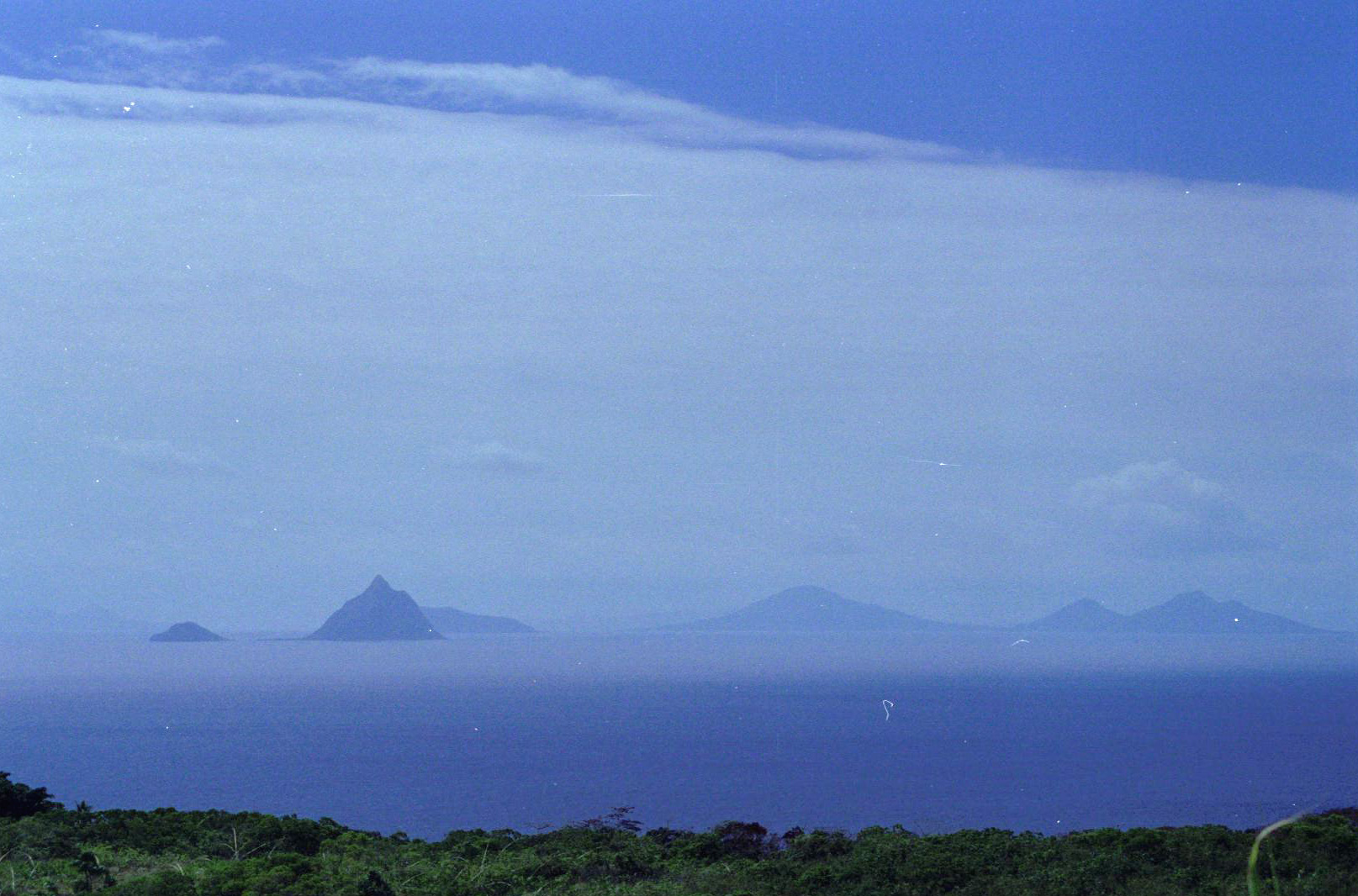
 Vanuatu's islands tend to come in two varieties: Volcanic islands with
sharp peaks and coral atolls. The view from the top of Nguna island
shows a number of the former. The sharpest island, to the lower left,
rises about 1000 feet straight out of the ocean. It's unforested, inhabited
only by nesting seabirds.
Vanuatu's islands tend to come in two varieties: Volcanic islands with
sharp peaks and coral atolls. The view from the top of Nguna island
shows a number of the former. The sharpest island, to the lower left,
rises about 1000 feet straight out of the ocean. It's unforested, inhabited
only by nesting seabirds.
Imagicity | Photography - exotica, mundanity and wonders | © Dan McGarry