beograd
See also: || recent || view slideshow
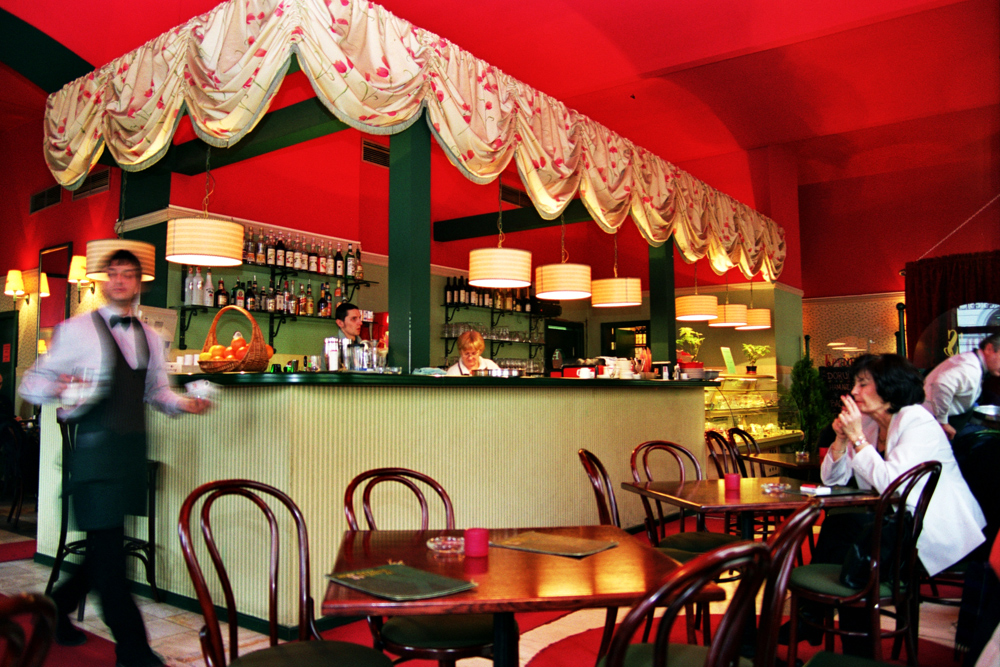 This is a fairly typical example of the well-appointed
and popular cafés that can be found three and four
to the city block in downtown Belgrade.
Unfortunately, Kevin's was shut down by the city a few
days after this photo was taken. I don't read enough
Serbian to know what reason was offered by the official
letter posted on its door.
This is a fairly typical example of the well-appointed
and popular cafés that can be found three and four
to the city block in downtown Belgrade.
Unfortunately, Kevin's was shut down by the city a few
days after this photo was taken. I don't read enough
Serbian to know what reason was offered by the official
letter posted on its door.
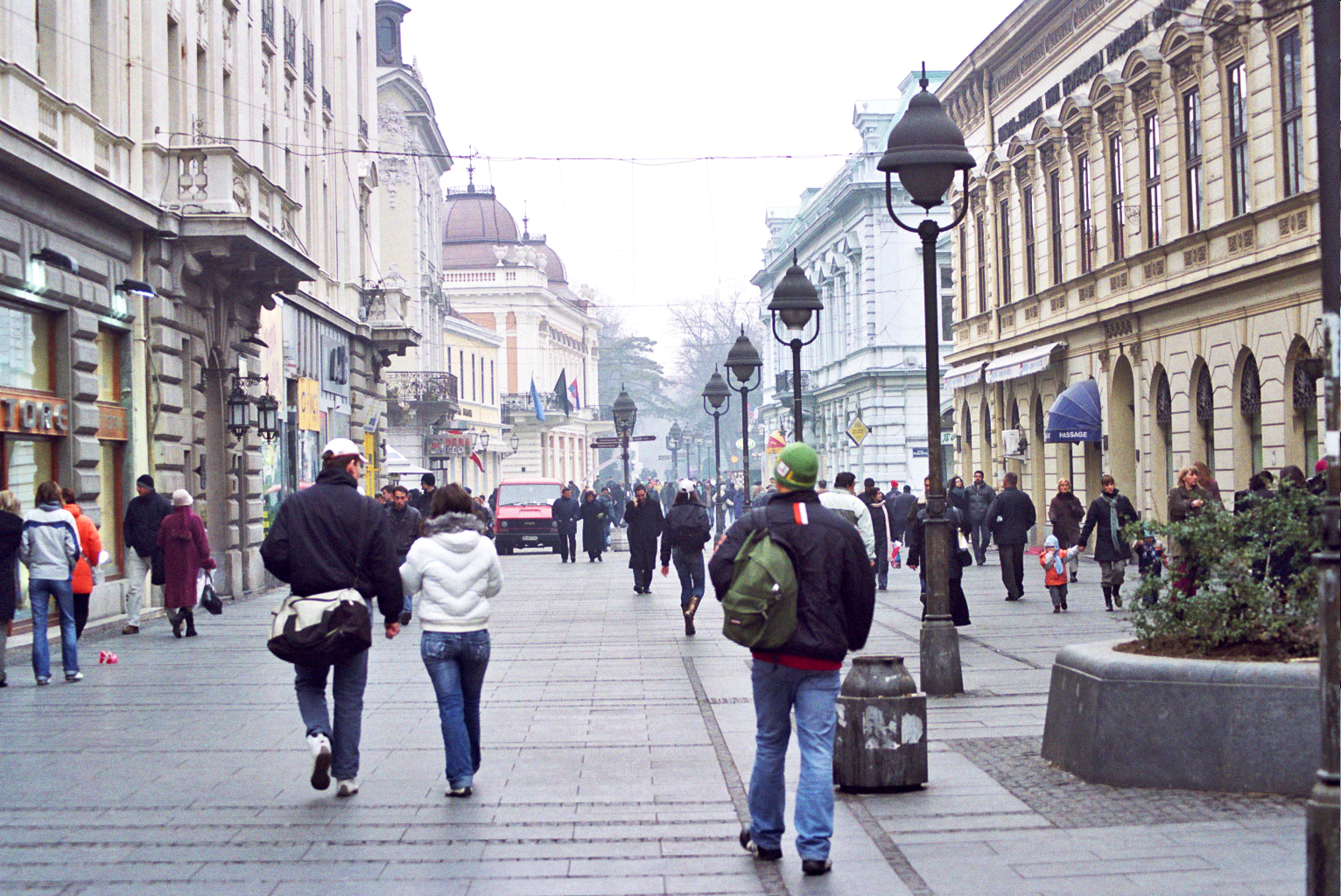 Very few people actually call this street by its
name; for almost everyone, it's simply 'the walking
street'. Located in the heart of old Belgrade, the
architecture is a curious mix of Austro-Hungarian,
Slavo-turkic and Stalin-era Communist. This is
one of the most popular shopping districts in town.
Very few people actually call this street by its
name; for almost everyone, it's simply 'the walking
street'. Located in the heart of old Belgrade, the
architecture is a curious mix of Austro-Hungarian,
Slavo-turkic and Stalin-era Communist. This is
one of the most popular shopping districts in town.
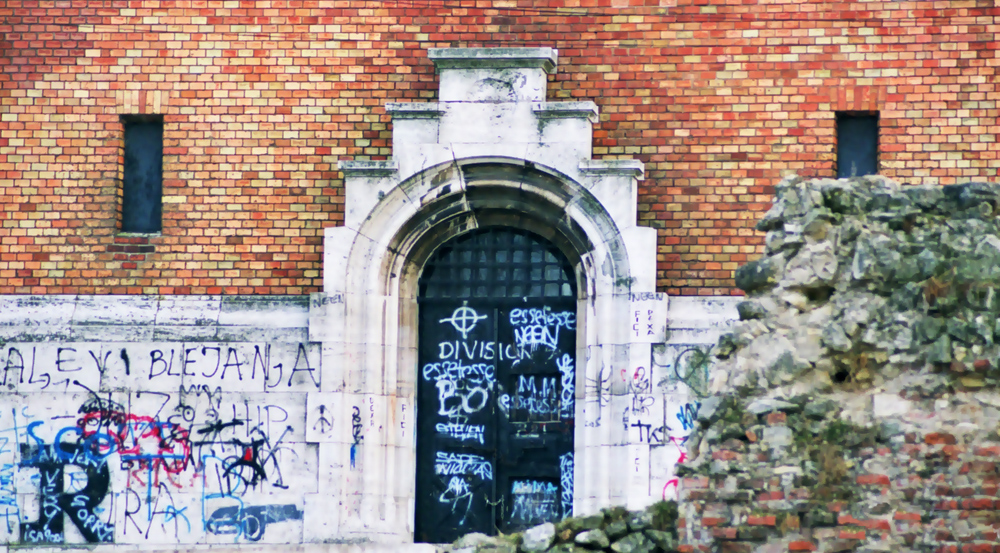 Five Millennium Towers were erected by the Hungarians,
one in Budapest, and one in each corner of its empire, to
mark 1000 years of rule. This tower in Zemun, a suburb of
Belgrade, marked the southern boundary.
As evidenced by the picture, the Empire has long since
disappeared, and the Serbs hold little reverence for this
part of their history.
Five Millennium Towers were erected by the Hungarians,
one in Budapest, and one in each corner of its empire, to
mark 1000 years of rule. This tower in Zemun, a suburb of
Belgrade, marked the southern boundary.
As evidenced by the picture, the Empire has long since
disappeared, and the Serbs hold little reverence for this
part of their history.
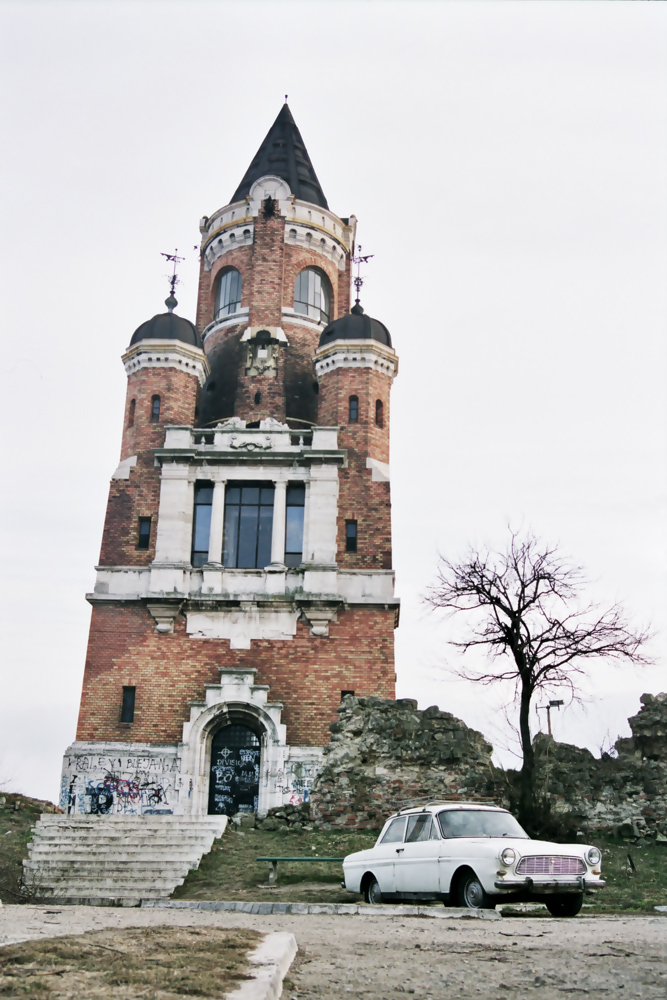 Five Millennium Towers were erected by the Hungarians,
one in Budapest, and one in each corner of its empire,
to mark 1000 years of rule. This tower in Zemun, a suburb
of Belgrade, marked the southern boundary.
I really like the composition of this photo, as it
encapsulates much of the essence of Belgrade today.
Five Millennium Towers were erected by the Hungarians,
one in Budapest, and one in each corner of its empire,
to mark 1000 years of rule. This tower in Zemun, a suburb
of Belgrade, marked the southern boundary.
I really like the composition of this photo, as it
encapsulates much of the essence of Belgrade today.
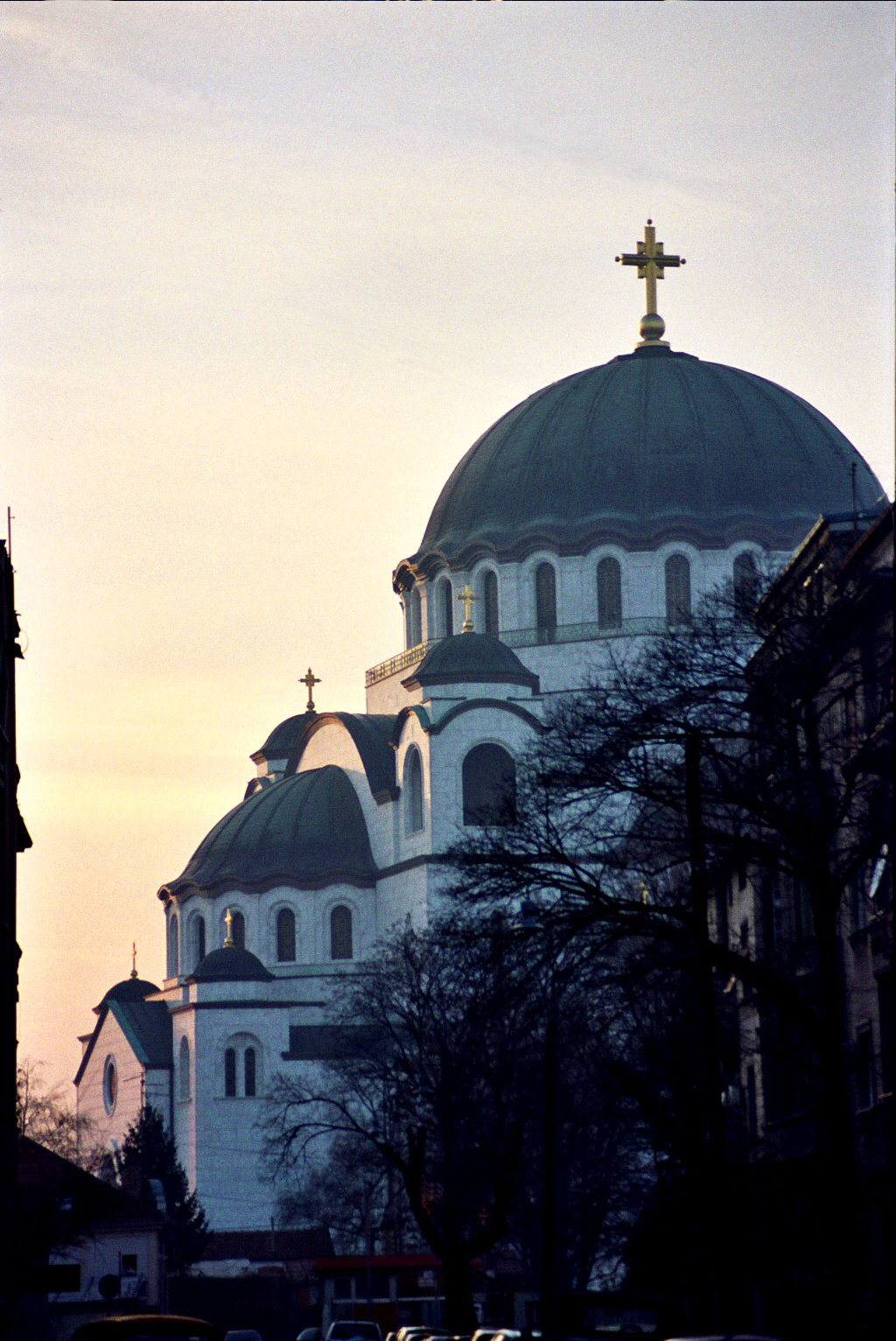 The Sveti Sava church dominates the view of downtown
Belgrade from miles away. The church, currently in the
final stages of a major renovation, is imposing, a
fascinating mixture of Turkish, Slavic and Italian
Renaissance styles.
The Sveti Sava church dominates the view of downtown
Belgrade from miles away. The church, currently in the
final stages of a major renovation, is imposing, a
fascinating mixture of Turkish, Slavic and Italian
Renaissance styles.
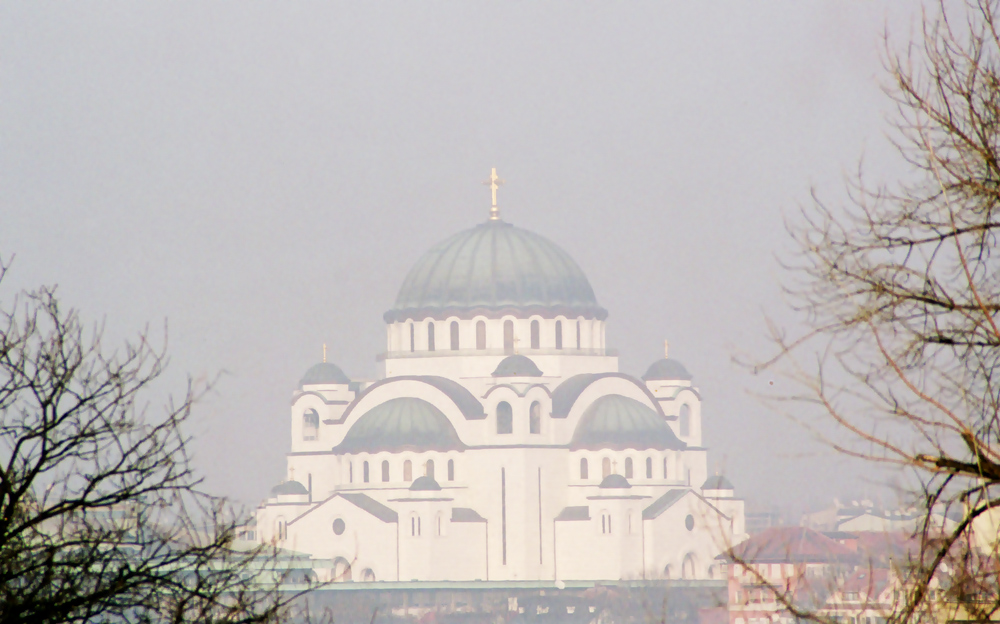 The massive yet airy bulk of Sveti Sava church dominates the
Belgrade skyline. It balances the bulk of the great mosques
of its time with lighter italianate influences reminiscent of
the Duomo in Florence.
This view, through the ever-present haze of urban smog,
enhances its feeling of lightness.
The massive yet airy bulk of Sveti Sava church dominates the
Belgrade skyline. It balances the bulk of the great mosques
of its time with lighter italianate influences reminiscent of
the Duomo in Florence.
This view, through the ever-present haze of urban smog,
enhances its feeling of lightness.
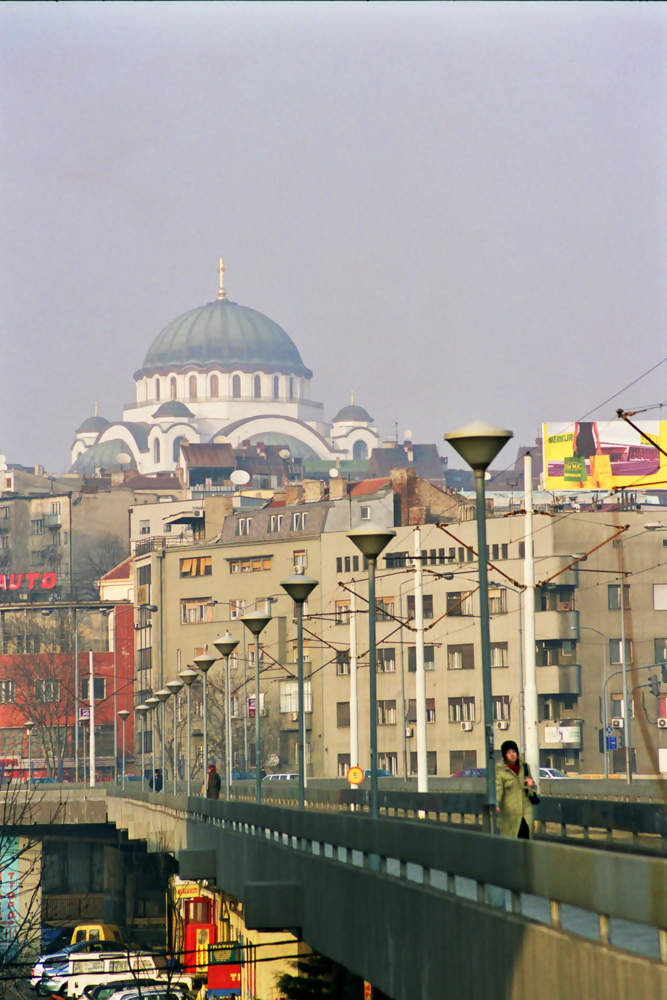 The massive yet airy bulk of Sveti Sava church dominates the
Belgrade skyline. It balances the bulk of the great mosques
of its time with lighter italianate influences reminiscent of
the Duomo in Florence.
I was quite taken by the contrast between the mundane and
transcendent elements that make Belgrade such an interesting
city.
The massive yet airy bulk of Sveti Sava church dominates the
Belgrade skyline. It balances the bulk of the great mosques
of its time with lighter italianate influences reminiscent of
the Duomo in Florence.
I was quite taken by the contrast between the mundane and
transcendent elements that make Belgrade such an interesting
city.
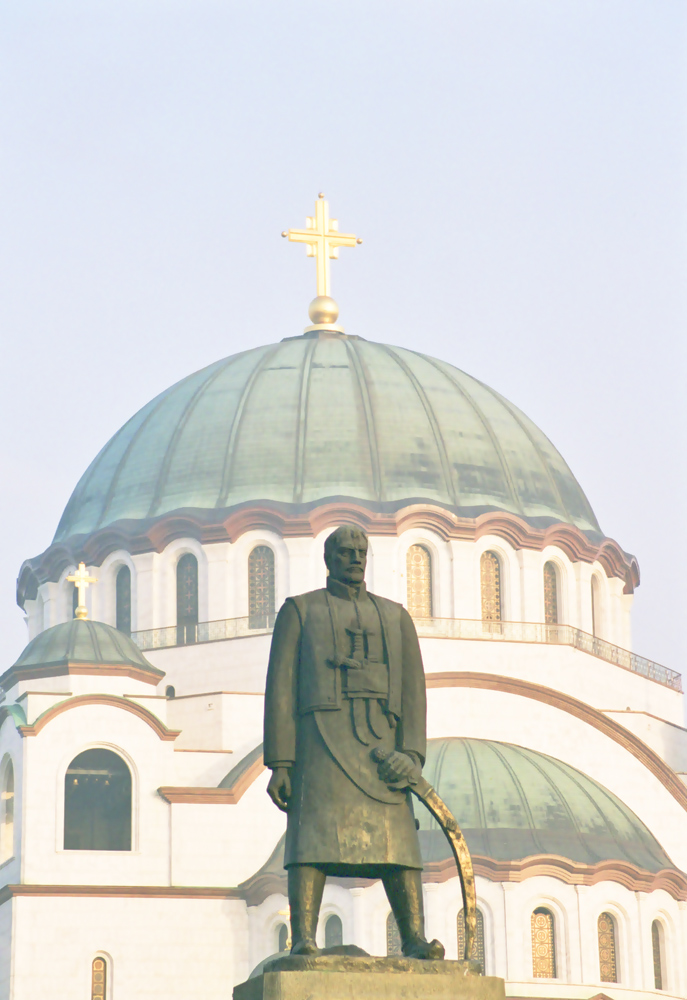 The massive yet airy bulk of Sveti Sava is here foregrounded by
a statue of one of the great Serbian 'defenders' from the Karadjordje
line of kings.
Statues such as this one, of stern-looking, heavily armed warlords,
are dotted throughout the city centre. In my opinion, this particular
example represents the strongest, clearest example of the warrior
nature that still survives in serbian culture.
The massive yet airy bulk of Sveti Sava is here foregrounded by
a statue of one of the great Serbian 'defenders' from the Karadjordje
line of kings.
Statues such as this one, of stern-looking, heavily armed warlords,
are dotted throughout the city centre. In my opinion, this particular
example represents the strongest, clearest example of the warrior
nature that still survives in serbian culture.
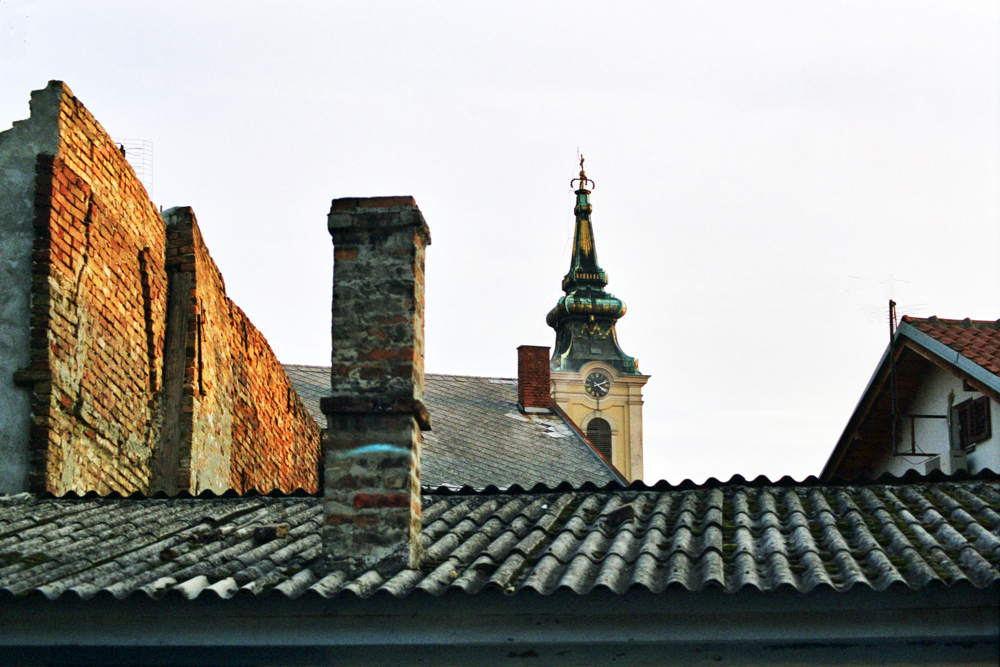 Zemun, once a separate village but now a suburb of Belgrade,
once marked the eastern edge of the Austro-Hungarian Empire.
As a result, it has a markedly more '<i>Mittel Europan</i>'
feel to it than other neighbourhoods. This view across the
rooftops captures a little of its feel.
Zemun, once a separate village but now a suburb of Belgrade,
once marked the eastern edge of the Austro-Hungarian Empire.
As a result, it has a markedly more '<i>Mittel Europan</i>'
feel to it than other neighbourhoods. This view across the
rooftops captures a little of its feel.
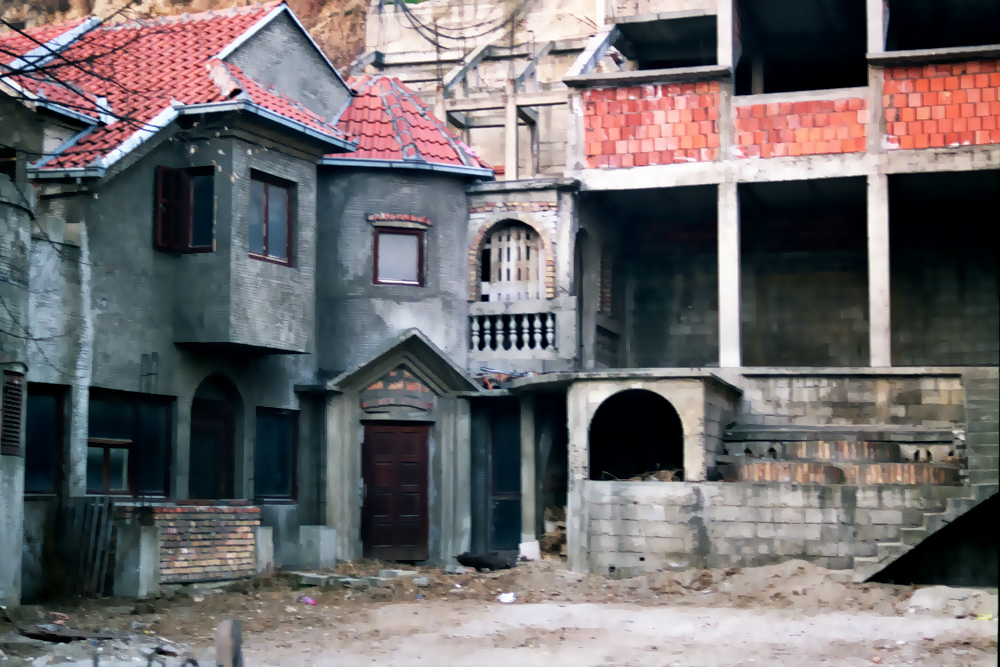 We were driving into Zemun, a suburb of Belgrade that once
marked the eastern edge of the Austro-Hungarian Empire, when
I noticed this unusual construction site.
There are a great many orphaned construction sites in and
around Belgrade, abandoned following recent political turmoil
which resulted in significant contention over the ownership of
many properties.
We were driving into Zemun, a suburb of Belgrade that once
marked the eastern edge of the Austro-Hungarian Empire, when
I noticed this unusual construction site.
There are a great many orphaned construction sites in and
around Belgrade, abandoned following recent political turmoil
which resulted in significant contention over the ownership of
many properties.
Imagicity | Photography - exotica, mundanity and wonders | © Dan McGarry